
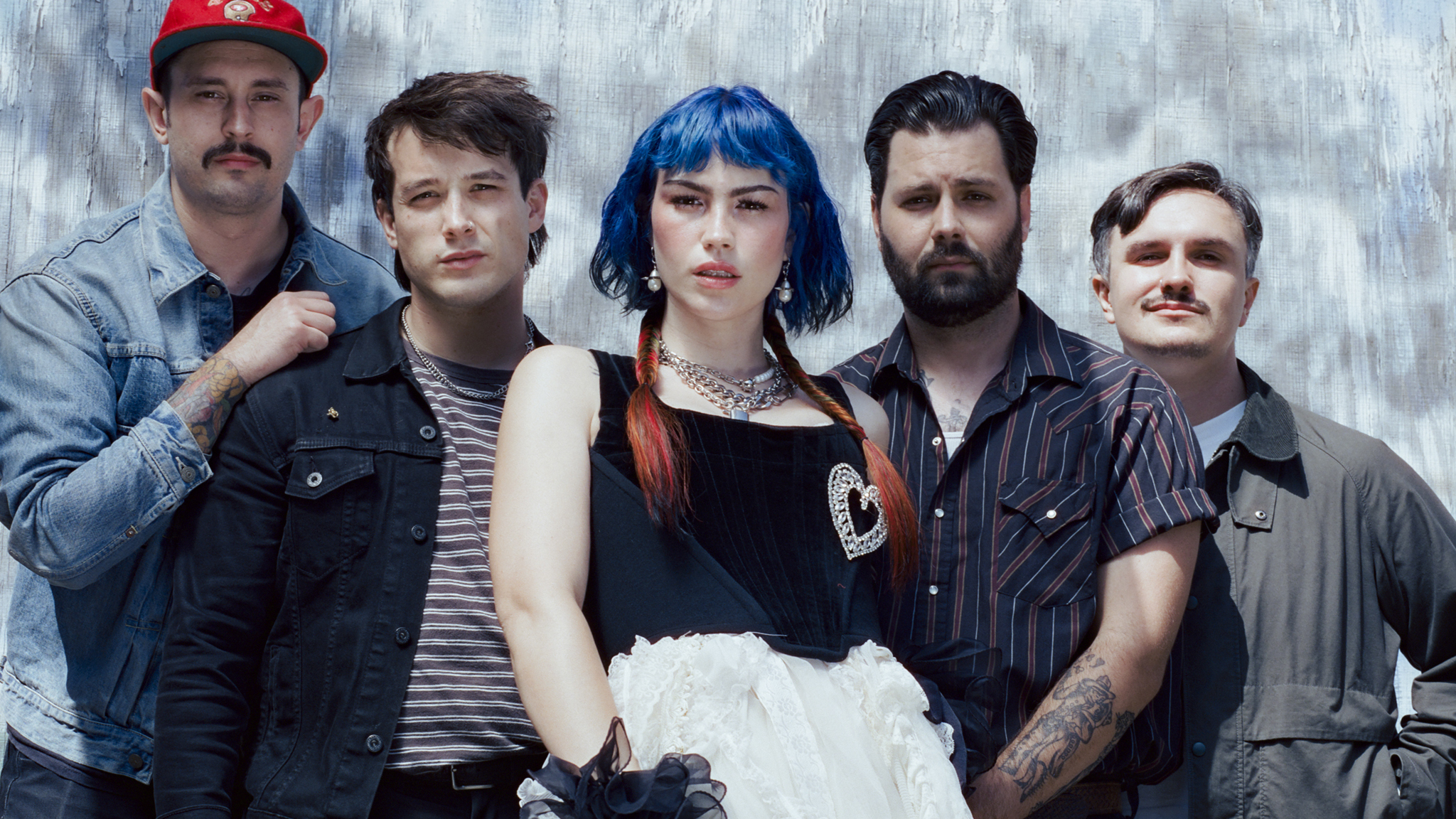
Scowl is a band that sounds exactly like their name implies. Venomous, fierce, antagonistic; a sneer not to be crossed. Over the last five years, the Californian band has firmly planted their flag in the hardcore scene with their vicious sound and ripping live shows, sharing stages around the world with the likes of Circle Jerks, Touché Amoré and Limp Bizkit, and filling slots at prominent festivals like Hellfest, Sick New World, and Reading and Leeds. But with their upcoming record, Are We All Angels, Scowl are aiming to funnel all that aggression through a more expansive version of themselves. Formed in 2019, after vocalist Kat Moss, a Bay Area scene regular with no prior musical experience, connected with guitarist Malachi Greene and drummer Cole Gilbert at the legendary Berkeley venue 924 Gilman the previous year. They soon recruited bassist Bailey Lupo, and later completed their lineup with the addition of guitarist Michael Bifolco in 2022. After self-releasing a pair of hard-hitting demos and playing local shows, Scowl became deeply immersed in the scene, coming up with a rising group of bands like Drain, GEL and Gulch.
Much of Are We All Angels grapples with Scowl’s newfound place in the hardcore scene, a community which has both embraced the band and made them something of a lightning rod over the past few years. Standout single “Not Hell, Not Heaven”, which you can listen to below this article, outright rejects the narratives cast onto them by outsiders. “It’s about feeling victimized and being a victim, but not wanting to identify with being a victim,” explains Moss. “It’s trying to find grace in the fact that I have my power. I live in my reality. You have to deal with whatever you’re dealing with, and it ain’t working for me”. Are We All Angels is a record marked by alienation, grief and the loss of control. “Control is unfortunately part of the feminine experience in rock music and in a fairly male-dominated scene,” says Moss. “You have to be hot and sexy, but not too sexy because that’s slutty. You want to be strong and talented, but don’t show yourself off too much because that’s embarrassing and cringe. That side of control really balls you up and tosses you across the room constantly, and it pisses me off”.
The record’s title-track is a philosophical place on the closing, asking questions like, “Is this all there is?” and ultimately putting it on the listener to decide. “It’s about the personal struggle between good and evil. It doesn’t matter how ‘good’ or ‘bad’ you are, there are systems that will try to rewrite your narrative no matter what you actually do”, explains Moss, noting that punctuation on Are We All Angels has been deliberately omitted in an attempt to leave the statement open-ended. “The reality is, you aren’t defined by your feelings. You are defined by what you do and how you treat people and connect with the world.”
At every turn on Are We All Angels, the band explores ambitious new directions and bends genre norms. Moss makes the most immediately noticeable evolution, dropping some of the gnarling bite of the band’s previous work in favor of a more textured and sometimes delicate approach. She flexes harmonies and melodic sensibilities that might surprise even the most dedicated Scowl fans. Moss cites a wide array of influences outside the realm of hard rock – everything from Billie Eilish to Radiohead, Car Seat Headrest to Julien Baker. “The majority of us were really not proficient musicians when this band started,” she admits. “It was very Germs-esque in that way, like baby’s first hardcore band, which is awesome. But now, we still might not know what we’re doing, but we have a better idea of what we want to do”. Scowl’s growth got a huge boost from producer Will Yip, who broadened the band’s scope. “Will would say, ‘Everything you have here is correct, but it’s in the wrong place,’” says Gilbert. Moss adds: “Will really helped restructure a lot of the material. Some songs he tore apart to make more space for the really good hooks and choruses”. But even through this more eclectic approach, Scowl loses none of their edge, and still manages to convey the anger and frustration that lies underneath. They are deeply committed to carrying the ethos of punk and its sense of community. “Hardcore and punk have sculpted how we operate, what we want to do as a band, and how we participate,” says Greene. “At our core, we are a punk and a hardcore band, regardless of how the song shifts and changes.”
Are We All Angels will be released on April 4th via Dead Oceans. Pre-orders are now available here.
Photo credit: Silken Weinberg