

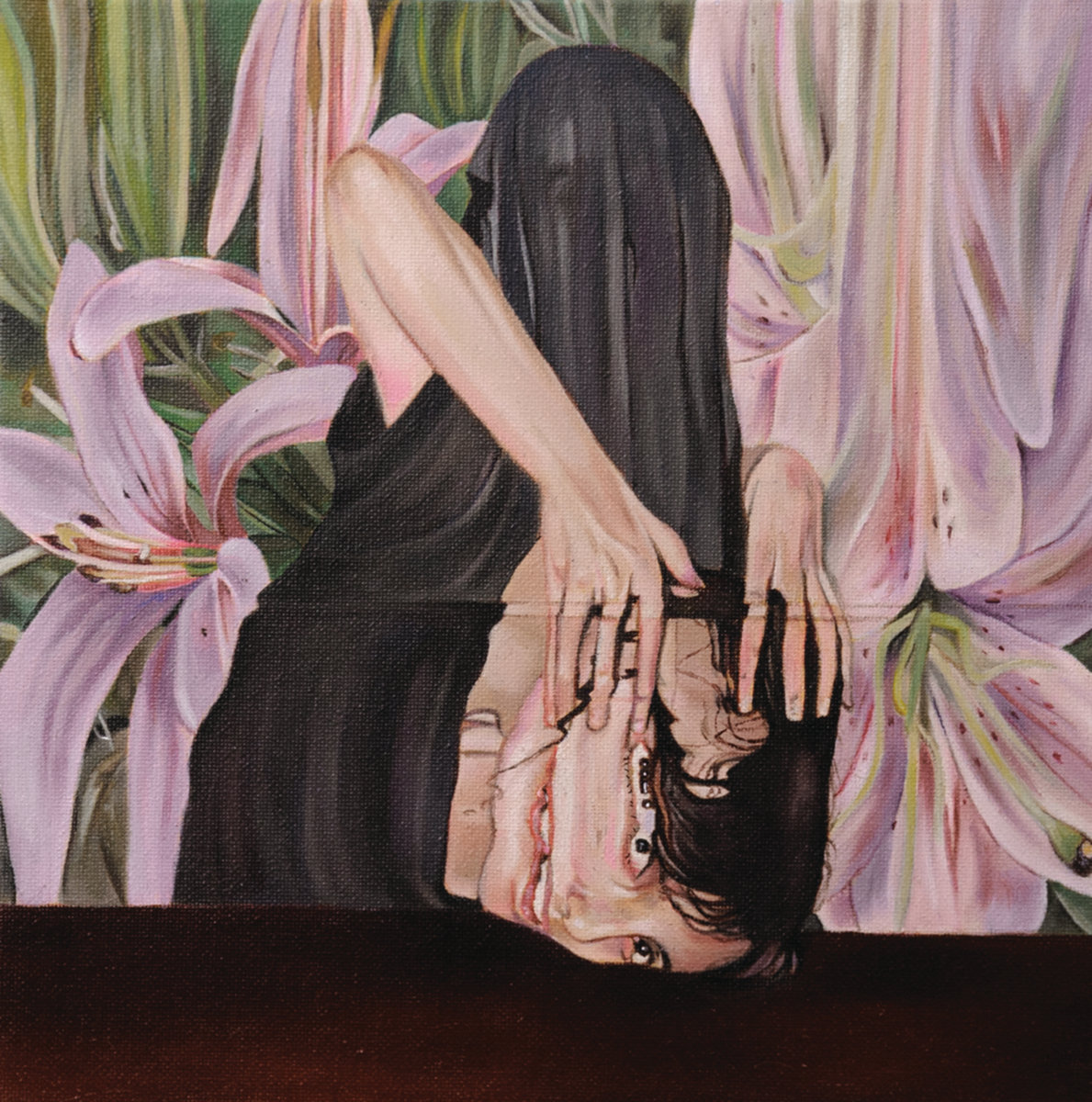
 The underground music scene in Portugal is something to behold. Ever expanding with new and exciting acts that take all forms of artistic expression, it is easy to lose oneself in a sea that is filled to the brim with excellence and innovation. Chief among these acts is Verbian, a Porto-based group that was founded in 2015 with the intent of pushing forward and fusing genres that range from metal and rock to experimental and electronic music. Early on, the trio understood that evolution is essential to heavy music, and so they committed themselves to delving deep into profound emotions and letting artistic expression take their sound to wherever they may dare. After the successful releases of 2019s JAEZ and 2021s Irrupção, Verbian mark their return with a brand-new opus, CASARDER, loosely translated to “burning house”, which stands as a testament of the trio’s growth, both sonic wise and as individuals.
It all starts with “Marcha do Vulto”, a song that melds the intensity of post-metal with psychedelic tones brought by the synth machinations of vocalist and guitarist Vasco Reis, as well as vocalist and bassist Alexandre Silva. Towards the end, we are injected with trumpet, saxophone and trombone melodies, brought by Pedro Sequeira, Igor Cavaz and Rodrigo Santos, respectively. It is Russian Circles with a drop of surrealism, right off the bat. “Fruta Caída do Mar” follows suit with an electronic melody, while a robotic voice speaks to us about people living life on their own bubble, unaware and oblivious to the world that is around them. As the enigmatic voice professes that it tries to be real, the rhythmic precision of drummer Guilherme Gonçalves enters the scene and starts our journey through one of the record’s most powerful songs, in which the band makes use of a more prog-oriented sound. “Depois de Toda a Mudança” continues the progressive trend, but twists it with psychedelic patterns, while a poem about the circle of life and death is both sung and growled to us. “Nada Muda” starts off with the voice of Francis Ford Coppola talking about how any artist of value will always doubt their own work, and how they must always be ready to face criticism from others, including their peers, all the while a soft guitar melody is played in the background, gradually growing into a chaotic cacophony of riffs.
The post-metal vibes return in “Pausa Entre Dias”, which brings a sense of impending doom through the usage of galloping riffs, ritualistic drumming and the occasional cosmic-sounding synth. “Vozes da Ilha” and “Não Vá o Diabo Tecê-las” close the record in an amazing fashion. The former retains that sense of urgency brought by the previous song, in what could be referred to as a sonically-charged chase through hostile territory. The latter brings about the definitive end of CASARDER, with its incessant sonic barrage of riffs, drum beats and synth soundscapes. All in all, CASARDER lives up to its name, standing as a statement on the fear of judgment, bursting at the seams with fiery emotion and the will to move forward despite the many insecurities that come with artistic expression and personal exposure. An almost entirely instrumental record that grips our attention from beginning to end, without overstaying its welcome. A raging, mesmerizing and multilayered sonic experience that demands to be experienced as a whole.
Highlighted tracks: Fruta Caída do Mar; Depois de Toda a Mudança; Pausa Entre Dias; Não Vá o Diabo Tecê-las